SPEAK TO US: 07791 321943

Science Curriculum Overview
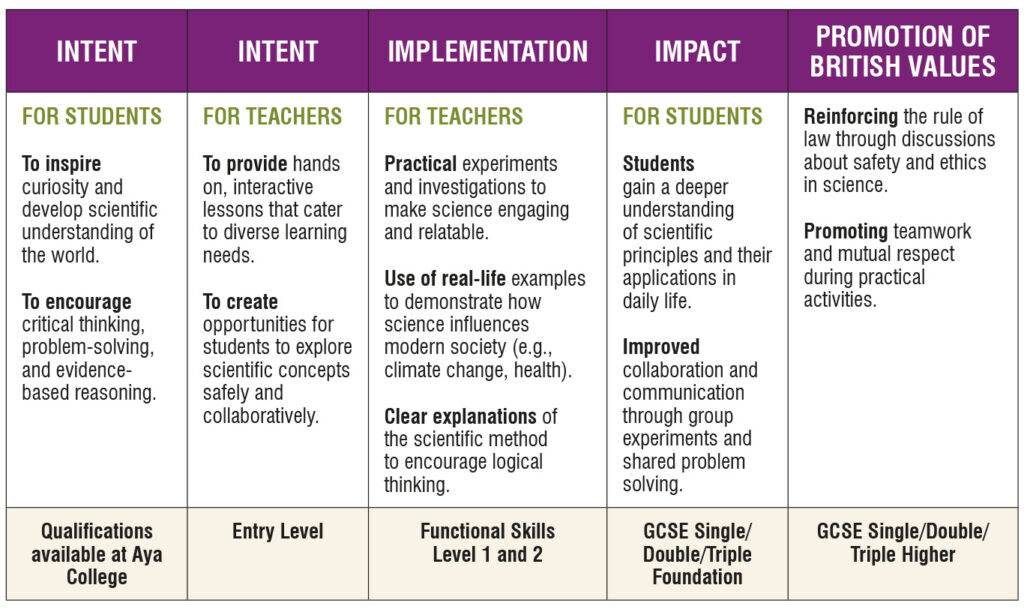
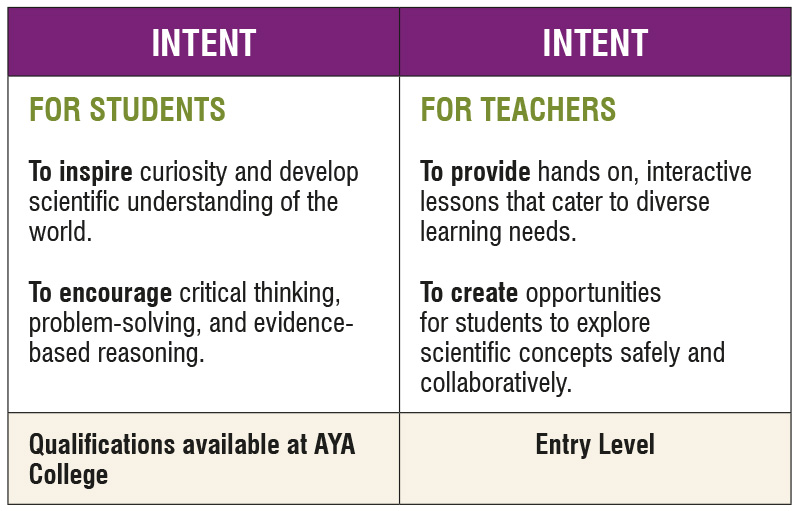
The Science curriculum at Aya College is designed to provide an engaging, flexible, and supportive learning experience for students with Social, Emotional, and Behavioural Difficulties (SEBD). It aims to build curiosity, resilience, and critical thinking skills while preparing students for qualifications and real-world applications. The approach is tailored to individual needs, ensuring all students can access and benefit from the subject.
Key Stage 3 (KS3): Building Curiosity and Scientific Knowledge
At KS3, the focus is on developing a strong foundation in science through hands-on, practical learning and exploration of key scientific concepts.
Core Areas:
- Biology: Cells and organisms, human body systems (e.g., digestion, respiration, reproduction), ecosystems, and inheritance.
- Chemistry: States of matter, chemical reactions, the periodic table, acids and alkalis, and mixtures and solutions.
- Physics: Forces, energy, electricity, waves, magnetism, and the basics of space science.
- Scientific Skills: Emphasis on observation, prediction, experimentation, and recording results.
Approach:
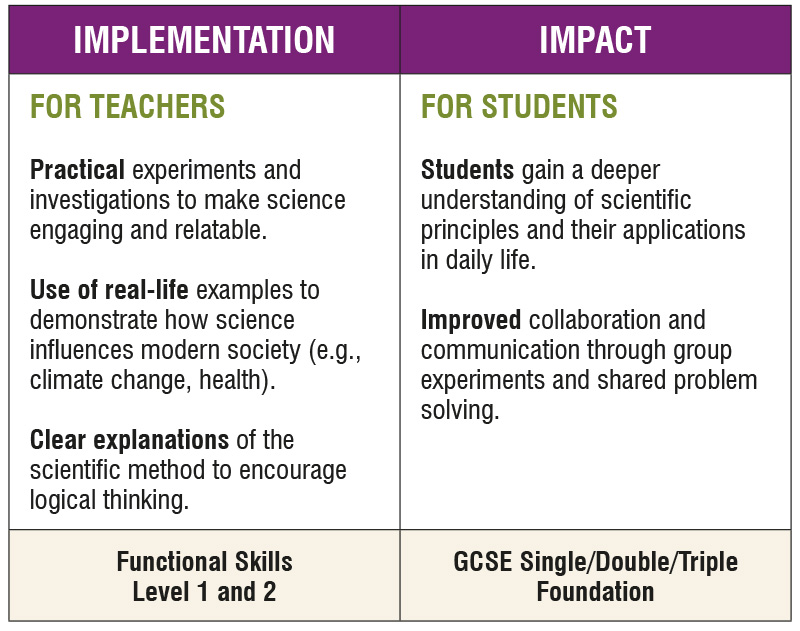
- Hands-On Learning: Practical experiments and activities make lessons engaging and relevant to students.
- Differentiated Lessons: Tasks are adapted to suit a range of abilities and learning styles, ensuring inclusivity.
- Real-Life Connections: Science is linked to everyday experiences, such as health, technology, and the environment, to spark interest.
- Emotional Support: Lessons are designed to reduce anxiety and foster a safe, positive environment for learning.
Goals:
- Develop curiosity and a love for science through exploration and discovery.
- Build foundational knowledge that supports progression to KS4.
- Enhance problem-solving, critical thinking, and teamwork skills.
Key Stage 4 (KS4): Preparing for Qualifications and Practical Application
At KS4, the focus shifts to preparing students for GCSE Science or functional skills pathways, depending on their individual needs and aspirations.
Core Areas:
Biology:
- Human biology: Health, disease, and body systems.
- Ecology and the environment: Sustainability and ecosystems.
- Genetics and evolution: Inheritance, adaptation, and biodiversity.
Chemistry:
- Atomic structure and bonding.
- Chemical reactions and energy changes.
- Rates of reaction and the periodic table.
- Environmental chemistry: Pollution and sustainable resources.
Physics:
- Forces, motion, and energy transfer.
- Electricity and magnetism.
- Waves, light, and sound.
- Space science and the universe.
Scientific Skills:
- Data analysis, forming hypotheses, and conducting experiments.
- Application of scientific knowledge in real-world contexts, such as health, technology, and environmental challenges.
Approach:
- GCSE Pathway: Students work towards GCSE Combined Science, which covers Biology, Chemistry, and Physics, or GCSE Single Sciences, depending on their ability and interest.
- Functional Skills Pathway: For students who require a more practical focus, Functional Skills Science is offered, emphasizing everyday applications such as health, safety, and the environment.
- Practical Experiments: Lessons are enriched with hands-on experiments to reinforce theoretical knowledge and develop inquiry skills.
- Exam Preparation: Structured revision sessions, practice papers, and targeted support to prepare students for assessments.
- Personalised Support: Individualized learning plans and small group interventions ensure students receive the assistance they need.
Goals:
- Equip students with the knowledge and skills to achieve qualifications in science.
- Develop an understanding of science in everyday life and its relevance to global challenges.
- Prepare students for further education, training, or careers in science-related fields.
- Foster confidence, independence, and problem-solving skills.
SEBD Considerations Across KS3 and KS4
- Therapeutic Approach: Lessons are designed to promote emotional well-being and reduce anxiety, providing a calm and supportive environment.
- Engagement and Motivation: Creative and interactive teaching methods, including the use of multimedia, real-life examples, and group activities, keep students engaged.
- Positive Reinforcement: Achievements are celebrated to boost confidence and encourage participation.
- Flexible Delivery: Content and pacing are adapted to meet the needs of individual learners, ensuring accessibility and progress.
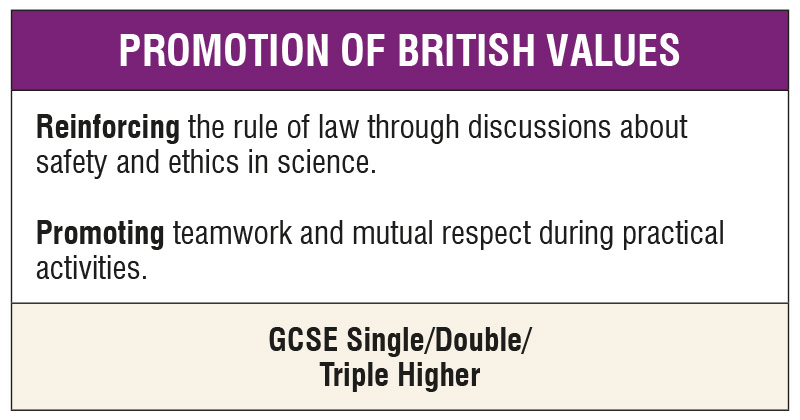
- Social Development: Collaborative activities and experiments encourage teamwork, communication, and respect for others’ ideas.
Cross-Curricular Links
- Science lessons at Aya College often link with other subjects, such as:
- Maths: Data handling, graphs, and calculations in experiments.
- English: Writing reports, presenting findings, and developing communication skills.
- Geography: Environmental science and sustainability.
- PSHE: Health, safety, and well-being.
Overall Impact
- The science curriculum at Aya College aims to:
- Ignite curiosity and a lifelong interest in science and the natural world.
- Build foundational knowledge and practical skills, enabling students to progress academically and personally.
- Equip students with the qualifications and confidence needed for further education, training, or employment.
- Foster resilience, independent thinking, and problem-solving abilities to help students succeed in all areas of their lives.
By combining a nurturing approach with high expectations, the science programme at Aya College ensures that all students can thrive, regardless of their starting point or challenges, and leave with skills that will serve them well in the future.