SPEAK TO US: 07791 321943

Physical Education Curriculum Overview
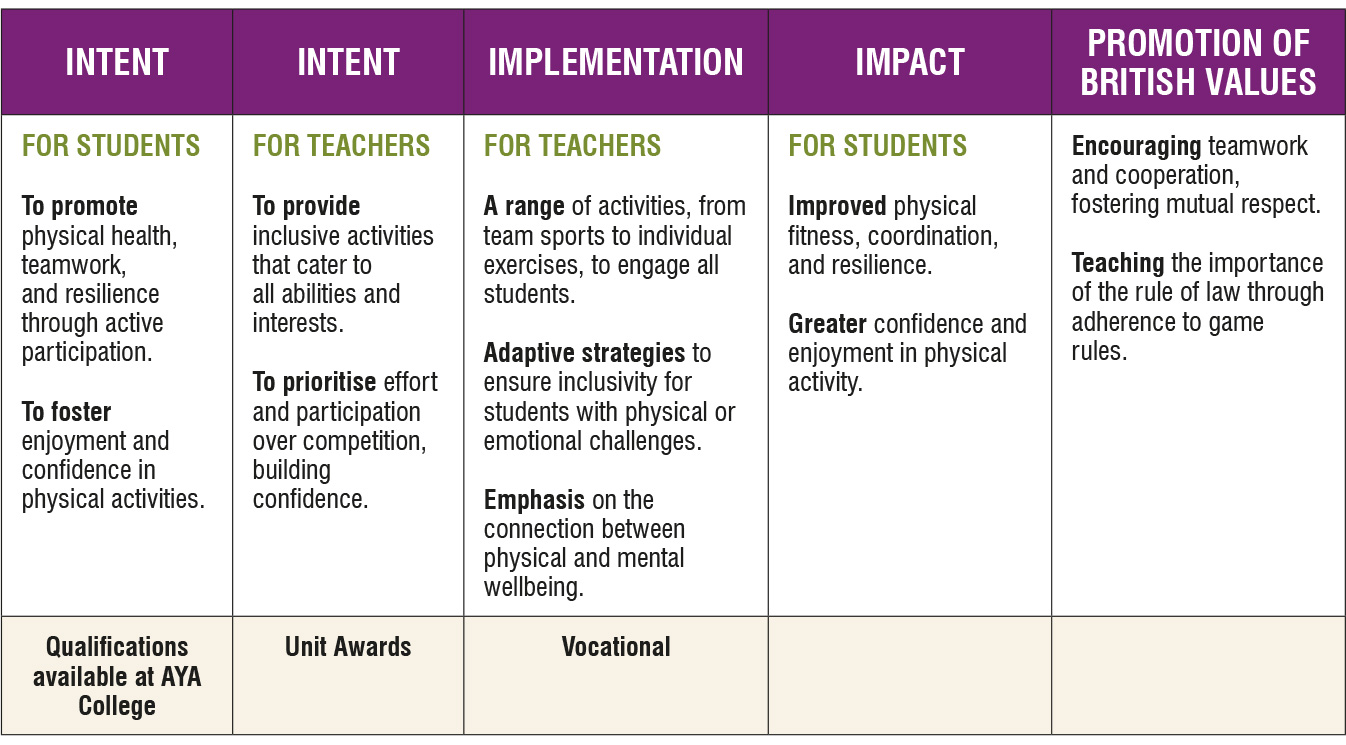
The Physical Education (PE) curriculum at Aya College is designed to promote physical health, mental well-being, teamwork, and confidence among students. Tailored to meet the needs of learners with Social, Emotional, and Behavioural Difficulties (SEBD), the curriculum provides a safe, inclusive, and engaging environment where students can develop their physical skills, build resilience, and learn the value of an active lifestyle.
PE at Aya College not only focuses on improving physical fitness but also emphasises key life skills such as leadership, collaboration, perseverance, and self-discipline. It is delivered through a combination of structured lessons, team-based activities, and individual challenges, ensuring that all students can participate and succeed.
Aims of the PE Curriculum
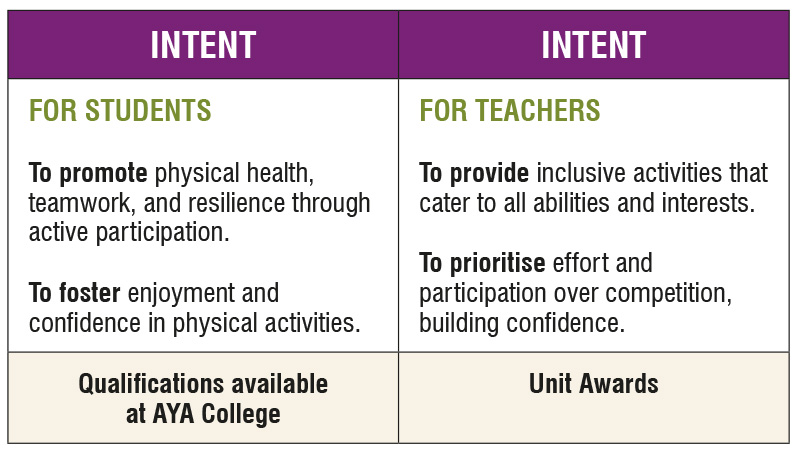
The PE curriculum at AYA College aims to:
- Promote physical fitness and encourage students to develop lifelong healthy habits.
- Support mental health by using physical activity as a tool for stress relief and emotional regulation.
- Build confidence and self-esteem through skill development and personal achievements.
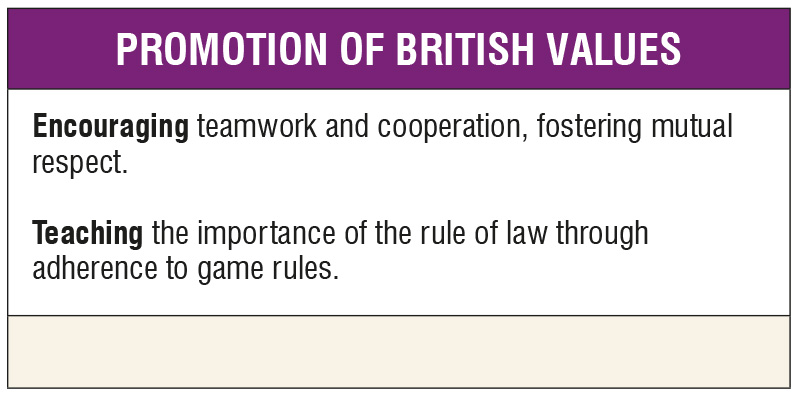
- Foster teamwork, communication, and leadership skills through group activities and sports.
- Encourage students to take responsibility for their health and well-being.
- Provide opportunities for students to explore a variety of sports and physical activities.
Key Stage 3 (KS3): Building Foundations in Physical Activity
At KS3, the focus is on introducing a broad range of physical activities and sports to develop students’ motor skills, fitness levels, and understanding of the benefits of physical activity. Lessons are designed to build confidence, motivation, and a positive attitude towards exercise.
Core Areas of Study at KS3:
Physical Skills Development:
- Fundamental movement skills: Balance, coordination, agility, and flexibility.
- Techniques for various sports, such as passing, dribbling, striking, and defending.
- Developing stamina, strength, and overall fitness.
Team Sports:
- Introduction to sports such as football, basketball, netball, rugby, and volleyball.
- Learning the rules, tactics, and roles within team games.
- Building teamwork, communication, and sportsmanship.
Individual Activities:
- Athletics: Running, jumping, and throwing techniques.
- Fitness training: Circuit training, aerobic exercises, and endurance-building.
- Gymnastics: Developing control, balance, and flexibility.
Health and Well-being:
- Understanding the importance of exercise for physical and mental health.
- Introduction to warm-up, cool-down, and injury prevention techniques.
- Exploring the link between physical activity, stress relief, and emotional well-being.
Approach at KS3:
- Inclusive Activities: Lessons are adapted to meet individual abilities and needs, ensuring all students can participate and succeed.
- Encouragement and Support: Focus is placed on effort, participation, and personal improvement rather than competition.
- Varied Opportunities: Students are exposed to a wide range of activities to discover what they enjoy and excel in.
Goals at KS3:
- Develop fundamental physical skills and fitness.
- Build confidence, resilience, and a positive attitude towards physical activity.
- Encourage students to work collaboratively and support one another.
Key Stage 4 (KS4): Deepening Skills and Preparing for Adulthood
At KS4, the curriculum focuses on consolidating physical skills, improving fitness, and encouraging students to take ownership of their physical health. Students are introduced to more advanced techniques, strategies, and roles within sports and physical activities. The curriculum also prepares students for potential qualifications and post-school physical activity.
Core Areas of Study at KS4:
Skill Development and Performance:
- Refining techniques in team and individual sports.
- Developing strategic thinking and decision-making in competitive games.
- Exploring advanced fitness training methods, such as interval training and resistance exercises.
Team Sports and Leadership:
- Participating in competitive and friendly matches in sports like football, basketball, and cricket.
- Developing leadership skills through roles such as team captain or referee.
- Understanding the importance of teamwork, collaboration, and sportsmanship.
Health and Fitness:
- Creating personalised fitness plans to meet individual goals.
- Exploring the impact of lifestyle choices on fitness and health.
- Understanding nutrition and its role in physical performance and well-being.
Alternative Sports and Activities:
- Introducing students to less traditional activities, such as yoga, dance, or outdoor pursuits (e.g., hiking or orienteering).
- Exploring the role of mindfulness and relaxation in physical and mental health.
Preparing for the Future:
- Understanding the benefits of maintaining an active lifestyle into adulthood.
- Exploring opportunities for further education, training, or careers in sports and physical fitness.
Approach at KS4:
- Personalised Learning: Students set personal goals and work on areas of interest or need, such as improving fitness or mastering a specific sport.
- Independent Thinking: Encouraging students to take responsibility for their own health and fitness choices.
- Pathway Support: Providing guidance for students interested in pursuing qualifications or careers in sports.
Goals at KS4:
- Deepen students’ understanding of physical fitness and its lifelong benefits.
- Equip students with the skills and motivation to stay active and healthy beyond school.
- Develop leadership, teamwork, and communication skills through physical activity.
SEBD Considerations in PE
The PE curriculum at AYA College is designed to support students with SEBD by:
- Creating a Safe and Supportive Environment: Lessons are structured to reduce anxiety and encourage positive participation.
- Focusing on Personal Achievement: Emphasis is placed on individual progress, effort, and self-improvement rather than competition.
- Building Confidence: Activities are designed to help students overcome challenges, build resilience, and experience success.
- Promoting Emotional Regulation: Physical activity is used as a tool for reducing stress and improving mood and focus.
Cross-Curricular Links
The PE curriculum at AYA College supports learning and development in other areas:
- PSHE: Promoting physical and mental health, resilience, and teamwork.
- Science: Exploring the biology of exercise, the effects of physical activity on the body, and the importance of nutrition.
- Maths: Using data to measure performance, such as tracking fitness progress or calculating heart rates.
- Geography: Linking outdoor activities to navigation and environmental awareness.
Assessment in PE
Progress in PE is assessed through:
- Physical Performance: Observing students’ ability to perform skills, techniques, and strategies in various activities.
- Engagement and Effort: Monitoring participation, teamwork, and willingness to challenge themselves.
- Personal Goals: Encouraging students to set and achieve individual fitness or skill-related targets.
- Self-Reflection: Helping students evaluate their own progress and identify areas for improvement.
Overall Impact of the PE Curriculum
The PE curriculum at AYA College aims to:
- Foster a love for physical activity and an understanding of its benefits for both physical and mental health.
- Develop skills such as teamwork, leadership, and resilience, which are transferable to other areas of life.
- Build confidence and self-esteem through personal achievements and positive experiences.
- Encourage students to adopt healthy habits that will support their well-being throughout their lives.
By prioritising inclusivity, personal growth, and emotional well-being, the PE curriculum at AYA College ensures that all students, regardless of their abilities or challenges, can enjoy the benefits of physical activity and develop the skills they need for a healthy and active future.