SPEAK TO US: 07791 321943

History Curriculum Overview
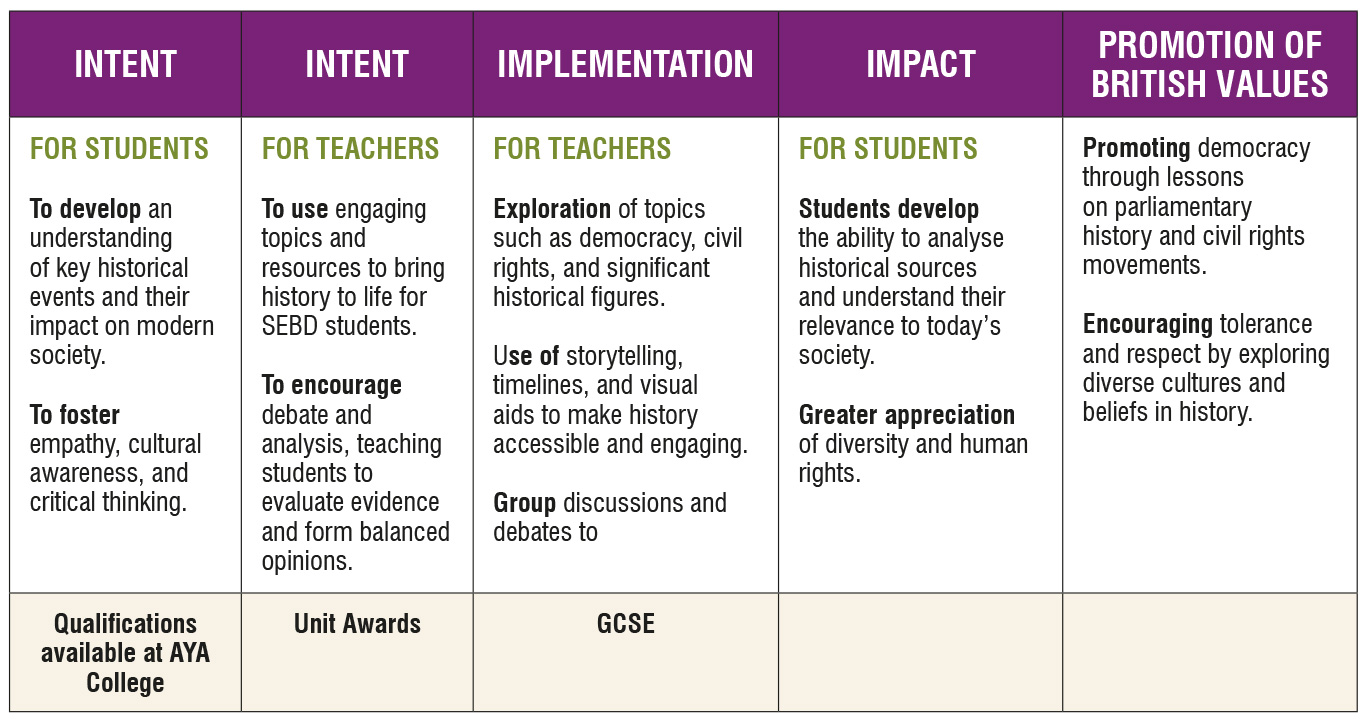
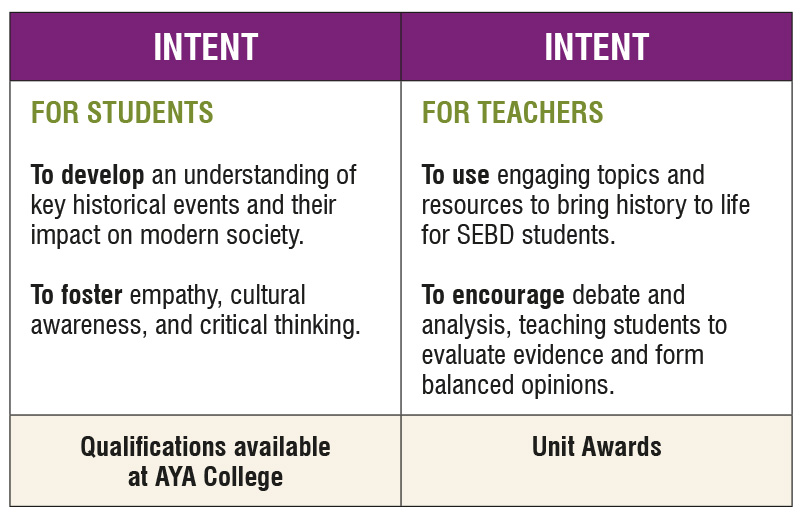
The History curriculum at Aya College is designed to inspire curiosity about the past while equipping students with key analytical, research, and critical thinking skills. Tailored to meet the needs of students with Social, Emotional, and Behavioural Difficulties (SEBD), the curriculum provides a supportive, engaging, and flexible learning environment. Through the exploration of events, individuals, and societal changes, students develop a greater understanding of how the past shapes the present and their role in the wider world.
Aims of the History Curriculum
The history curriculum at Aya College seeks to:
- Foster an interest in the past and encourage students to ask meaningful questions.
- Develop critical thinking, analysis, and evidence-based reasoning skills.
- Promote empathy and understanding by exploring diverse perspectives and experiences.
- Help students understand the significance of historical events in shaping modern society.
- Build confidence in expressing ideas through discussion, debate, and writing.
Key Stage 3 (KS3): Exploring Key Historical Themes
At KS3, the focus is on building foundational historical knowledge, developing chronological understanding, and introducing historical enquiry skills.
Core Areas of Study:
- The Middle Ages:
- The Norman Conquest and its impact on England.
- Life in medieval society: feudalism, the Black Death, and the Peasants’ Revolt.
- Power and conflict: The Magna Carta and the development of parliament.
- The Tudors and Stuarts:
- The English Reformation and religious changes under Henry VIII and Elizabeth I.
- The English Civil War: Causes, key figures, and its legacy.
- Industrial Britain and the Modern World:
- The Industrial Revolution: Technological advances, urbanisation, and working conditions.
- The transatlantic slave trade: Its impact on Britain, Africa, and the Americas.
- Campaigns for social change: The suffragette movement and the fight for workers’ rights.
- Global History:
- The British Empire: Its growth, influence, and consequences for colonised nations.
- Key global conflicts: An introduction to World War I and World War II.
Approach:
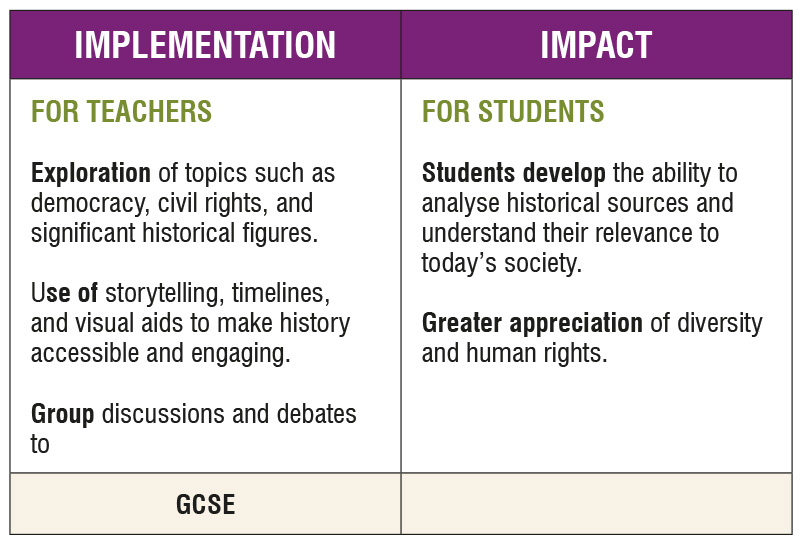
- Storytelling and Visual Learning: Lessons are brought to life through storytelling, historical artefacts, images, and videos.
- Enquiry-Based Learning: Students investigate key questions, such as “Why did the peasants revolt?” or “What caused the Industrial Revolution?”
- Accessibility and Flexibility: Lessons are tailored to individual needs, ensuring all students can engage with the content.
- Developing Historical Skills:
- Chronology: Understanding timelines and sequencing events.
- Analysis: Evaluating primary and secondary sources.
- Perspective: Exploring diverse viewpoints and experiences.
Goals:
- Build foundational knowledge of key historical events and themes.
- Develop skills in historical enquiry, analysis, and evidence-based reasoning.
- Foster an appreciation of how history shapes the present and future.
Key Stage 4 (KS4): Deepening Historical Understanding and Preparing for Qualifications
At KS4, the curriculum focuses on preparing students for GCSE History or an equivalent pathway, depending on their individual needs and abilities.
Core Areas of Study:
- Modern World History:
- World War I: Causes, key events, and the impact on society.
- World War II: The rise of dictatorships, the Holocaust, and the war’s global consequences.
- The Cold War: Tensions between the USA and USSR and key events such as the Cuban Missile Crisis.
- British History:
- The impact of World War I and World War II on Britain.
- Social change in 20th-century Britain, including the NHS, immigration, and the civil rights movement.
- The significance of key events, such as women gaining the vote and the end of the British Empire.
- Thematic Studies:
- Medicine Through Time: A study of the development of medical knowledge, from medieval treatments to modern advances.
- Crime and Punishment Through Time: Exploring how laws, policing, and punishments have evolved.
- Depth Studies:
- Hitler’s Germany: The rise of the Nazi Party, life under Nazi rule, and the impact of World War II.
- The American Civil Rights Movement: Key figures, events, and its influence on global struggles for equality.
Approach:
- Exam Preparation:
- Structured lessons to develop skills in essay writing, source analysis, and interpretation.
- Practice with past papers and guidance on answering exam questions effectively.
- Project-Based Learning: Opportunities for students to explore topics of interest through independent or group research projects.
- Personalised Support: Tailored interventions and one-to-one support to help students succeed in assessments.
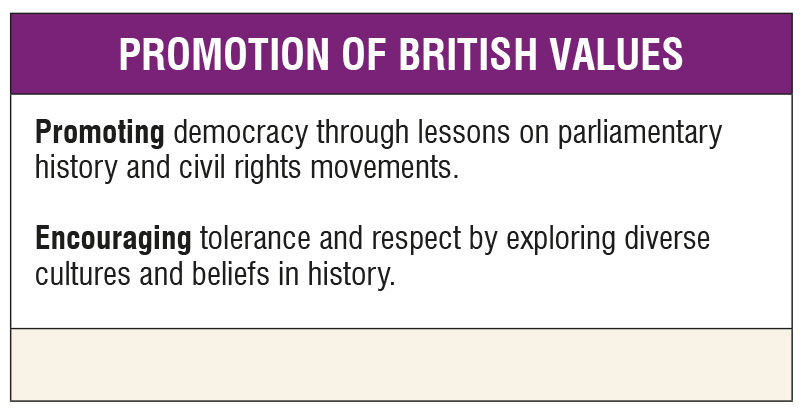
- Real-World Connections: Exploring how historical events relate to current issues, such as democracy, human rights, and social justice.
Goals:
- Prepare students for GCSE History or equivalent qualifications, with a focus on key skills such as source evaluation, essay writing, and critical thinking.
- Deepen understanding of significant events and themes in British and global history.
- Equip students with transferable skills for further education and future careers.
SEBD Considerations in History
The history curriculum is adapted to meet the needs of students with SEBD by:
- Providing a therapeutic approach: Creating a calm and supportive learning environment with clear routines and expectations.
- Using engaging and interactive methods: Lessons incorporate storytelling, visuals, and hands-on activities to maintain interest.
- Offering flexible content: Topics are adapted to suit individual interests and abilities, helping to build confidence and motivation.
- Fostering emotional connections: Exploring personal stories and diverse perspectives to help students relate to the content and develop empathy.
Cross-Curricular Links
- English: Developing writing skills through essays, debates, and historical narratives.
- Geography: Exploring the impact of historical events on the environment and world geography.
- PSHE: Linking historical themes to modern issues, such as human rights, equality, and democracy.
- Art: Exploring historical art, propaganda, and architecture as reflections of cultural and political change.
Assessment
Progress is assessed through a combination of:
- Class discussions to evaluate understanding and engagement.
- Written assignments, including source analysis and essay tasks.
- Project work and presentations to encourage independent research.
- Practice exams and mock assessments for GCSE preparation.
Overall Impact
The history curriculum at Aya College aims to:
- Inspire curiosity and a love for learning about the past.
- Develop critical thinking, analytical, and communication skills.
- Promote empathy and understanding of diverse perspectives and experiences.
- Equip students with the knowledge and skills needed to succeed in further education, employment, and as informed citizens.
By providing a flexible and supportive curriculum, Aya College ensures that all students, regardless of their challenges, can engage meaningfully with history, gain valuable skills, and build confidence in their ability to succeed.