SPEAK TO US: 07791 321943

English Curriculum Overview
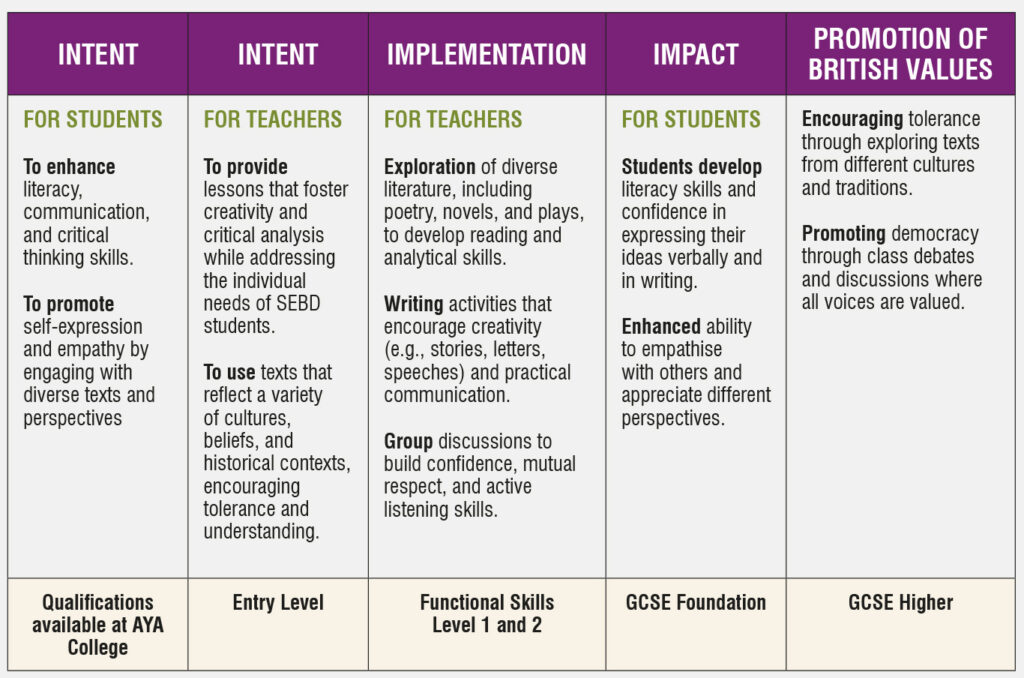
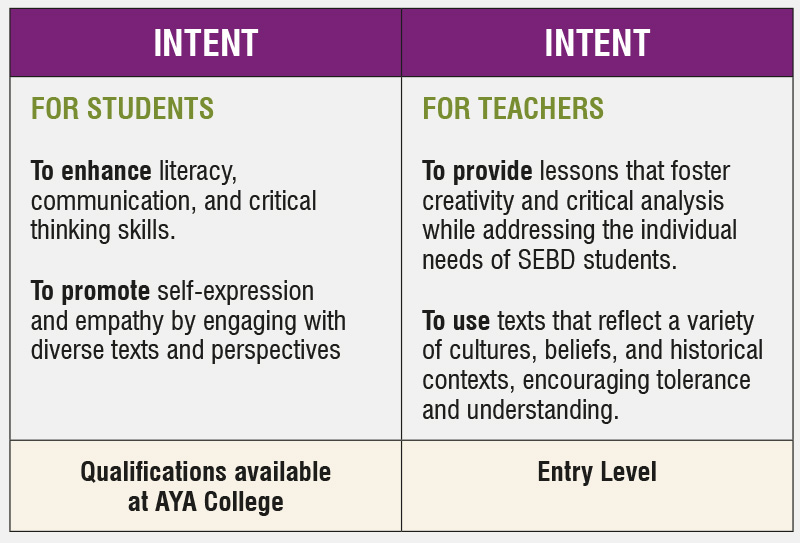
The English Curriculum for students with Social, Emotional, and Behavioural Difficulties (SEBD) at KS3 and KS4 is tailored to create a supportive, inclusive, and engaging learning environment. It aims to develop essential literacy skills while fostering confidence, creativity, and effective communication. The curriculum is designed to meet individual needs and prepare students for academic qualifications, further education, and life beyond school.
Key Stage 3 (KS3): Building Literacy and Confidence
At KS3, the focus is on developing foundational skills in reading, writing, and spoken communication, while fostering a love for language and literature.
Core Areas:
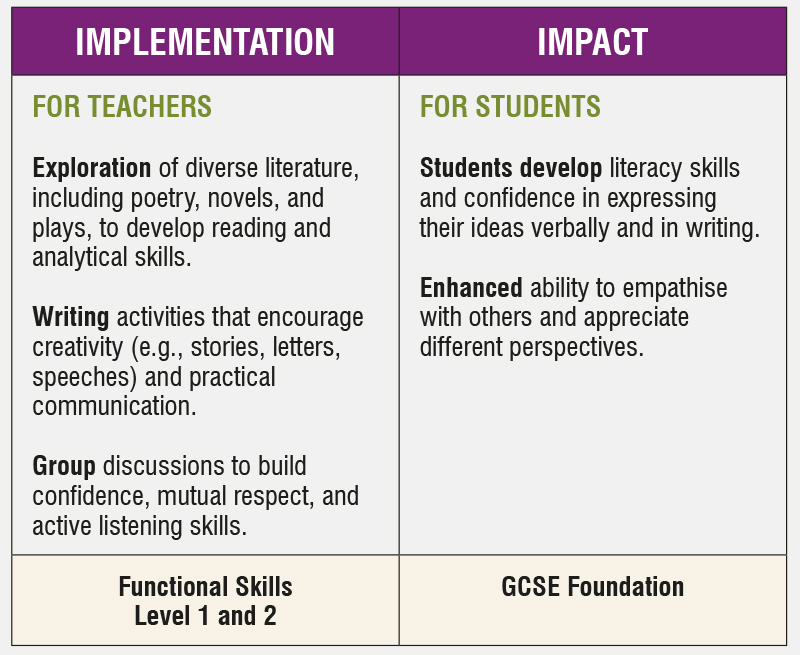
- Reading: Exploring a range of texts including fiction, non-fiction, poetry, and plays. Emphasis is placed on comprehension, inference, and analysis of language, themes, and characters.
- Writing: Developing skills in creative and transactional writing, including stories, descriptive pieces, letters, reports, and persuasive essays.
- Speaking and Listening: Encouraging confidence in verbal communication through discussions, presentations, role-play, and group activities.
- Grammar and Vocabulary: Building accuracy in spelling, punctuation, sentence structure, and vocabulary use.
Approach:
- Individualised Learning: Tasks are adapted to suit varying ability levels, ensuring all students can access the curriculum.
- Engagement Through Choice: Students are encouraged to explore texts that interest them, fostering a positive attitude toward reading and writing.
- Therapeutic Practices: Lessons incorporate strategies to reduce anxiety and build self-esteem, creating a safe space where students feel supported.
Goals:
- Develop functional literacy skills to support progression into KS4.
- Cultivate creativity and critical thinking through reading and writing.
- Build confidence in speaking and listening, preparing students for real-life communication.
Key Stage 4 (KS4): Preparing for Qualifications and Future Success
At KS4, the curriculum focuses on preparing students for GCSE English Language and/or English Literature, as well as functional skills qualifications where appropriate.
Core Areas:
- English Language:
- Reading: Analysis of fiction and non-fiction texts, focusing on comprehension, language techniques, and structure.
- Writing: Crafting creative and transactional pieces, with a focus on clarity, purpose, and audience.
- Speaking and Listening: Formal presentations, debates, and discussions to build confidence and articulation.
- English Literature:
- Study of set texts, such as novels, plays (e.g., Shakespeare), and poetry.
- Analysis of themes, characters, context, and literary devices.
- Comparative skills for analysing multiple texts and perspectives.
- Functional Skills English (Alternative Pathway):
- Focus on practical literacy skills such as form-filling, writing emails, interpreting instructions, and understanding workplace communication.
Approach:
- Exam Preparation: Structured lessons include practice exams, past papers, and revision strategies to build exam confidence.
- Life-Relevant Learning: Emphasis on real-world applications of English, such as writing CVs, job applications, and formal letters.
- Personalised Support: One-to-one or small-group interventions for targeted support and tailored learning experiences.
- Creative Elements: Opportunities for creative expression through storytelling, poetry, and personal reflection.
Goals:
- Prepare students for GCSE or functional skills qualifications, tailored to their level and aspirations.
- Develop critical reading and analytical skills applicable to further education and employment.
- Foster effective communication skills for personal and professional contexts.
SEBD Considerations Across KS3 and KS4
- Therapeutic Approach: Lessons are structured to create a calm and positive learning environment, promoting emotional well-being and reducing stress.
- Engagement and Motivation: Use of relatable, age-appropriate, and diverse texts to capture interest and spark discussions.
- Positive Reinforcement: Celebrating progress and achievements to build confidence and self-worth.
- Flexible Delivery: Lessons adapt to individual needs, with alternative pathways for students who require a more practical focus on literacy skills.
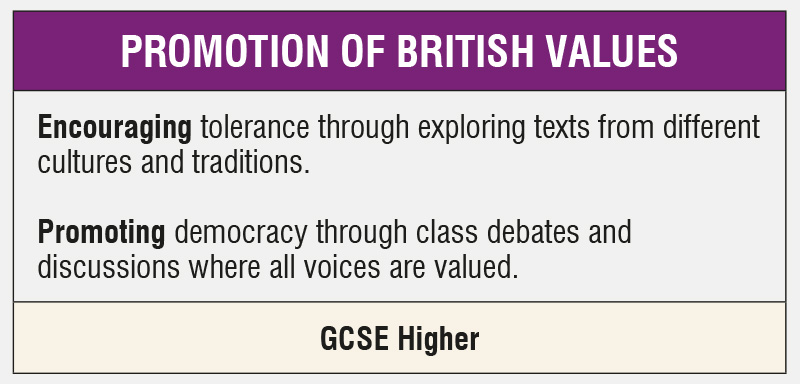
- Social Development: Activities that encourage teamwork, active listening, and respectful communication.
Overall Impact
The English curriculum at Aya College aims to:
- Build foundational literacy skills that empower students to access other areas of the curriculum.
- Foster a love for reading and creative expression, helping students develop their own voice.
- Equip students with the ability to interpret and communicate effectively in both academic and real-world contexts.
- Provide students with the qualifications and skills needed for further education, employment, and independent living.
- Develop resilience and confidence, enabling students to overcome challenges and succeed in their personal and academic journeys.
By focusing on individual strengths and needs, the English programme ensures that all students at Aya College are equipped with the tools to thrive academically, socially, and emotionally.