SPEAK TO US: 07791 321943

Creative Arts Curriculum Overview
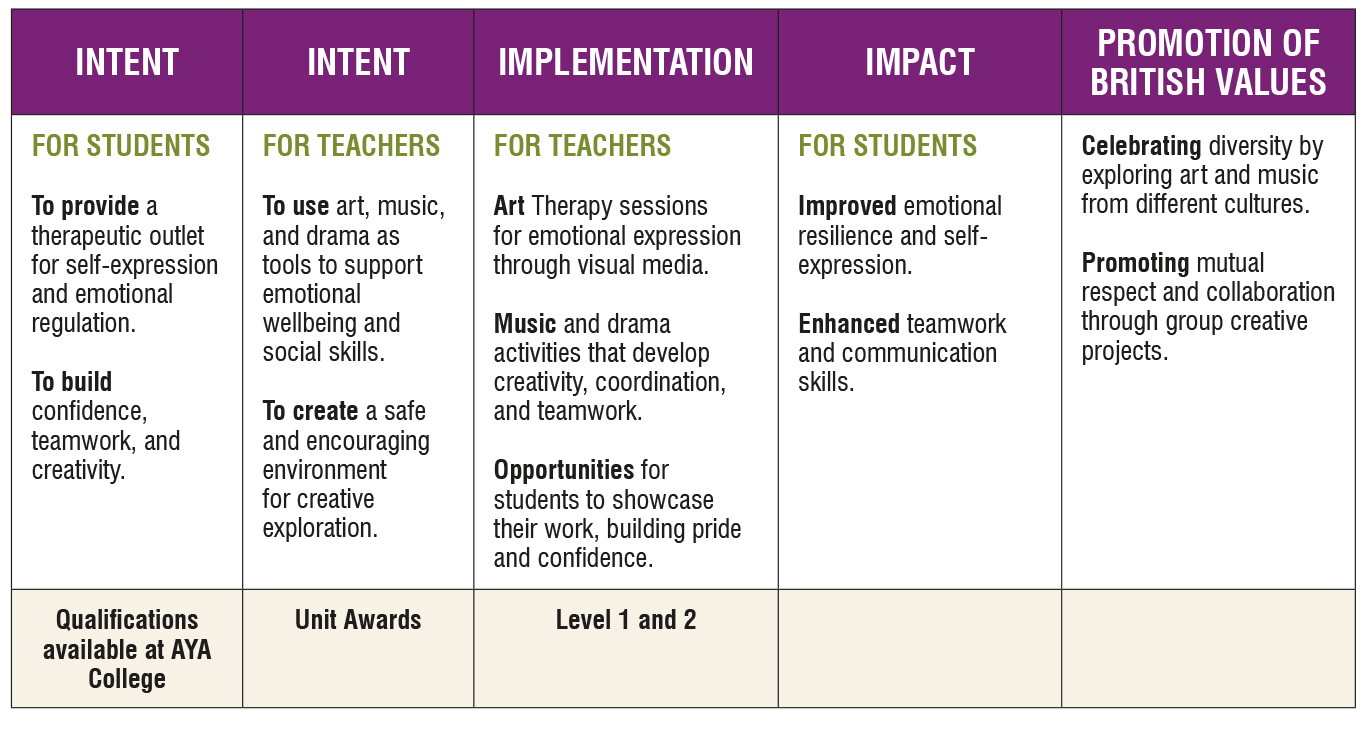
The Creative Arts (Art Therapy, Creative Music, Drama) curriculum at Aya College integrates Art Therapy, Creative Music, and Drama to provide students with unique opportunities to express themselves, explore their emotions, and develop important life skills. Designed with the needs of students with Social, Emotional, and Behavioural Difficulties (SEBD) in mind, the curriculum prioritises creativity, emotional well-being, and personal growth. Through hands-on, therapeutic, and engaging activities, students build confidence, develop self-awareness, and learn how to communicate effectively while exploring their own creativity.
The Creative Arts curriculum at Aya College is more than just skill building; it is a therapeutic tool that supports students’ mental health, emotional resilience, and social development. It fosters a sense of achievement and helps students build positive relationships with themselves and others.
Aims of the Creative Arts Curriculum
The Creative Arts curriculum at Aya College aims to:
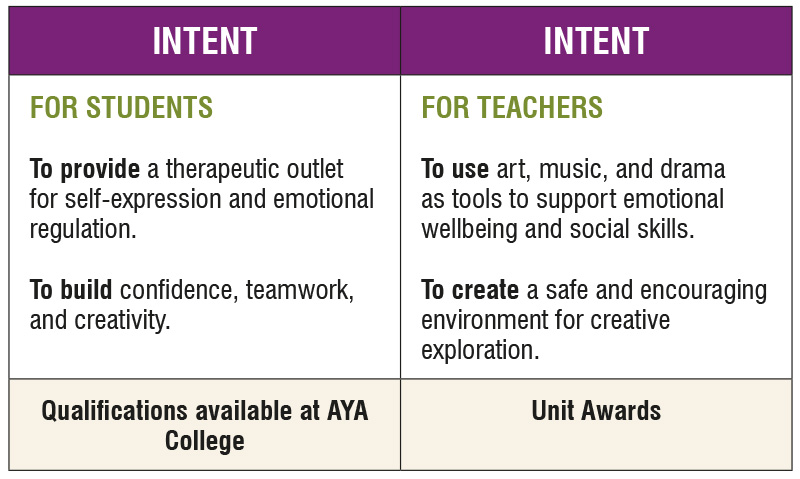
- Provide a therapeutic outlet for self-expression and emotional exploration.
- Build confidence, resilience, and self esteem in a safe and supportive environment.
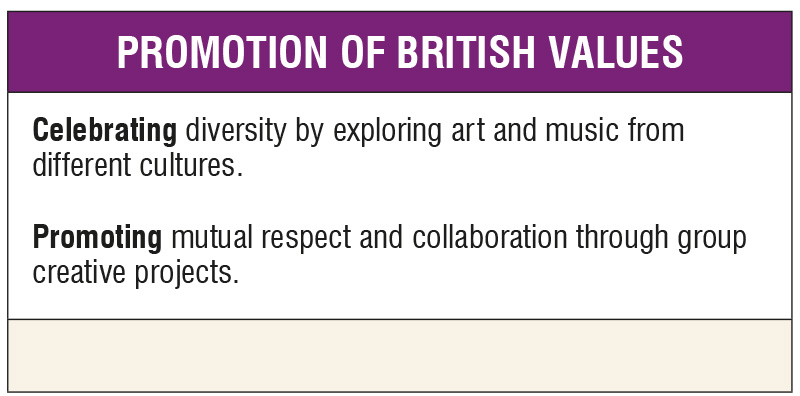
- Foster collaboration and communication through group activities and performance.
- Develop creative thinking, problem-solving, and artistic skills.
- Explore how the arts can contribute to emotional wellbeing and personal growth.
- Encourage an appreciation for the arts and their role in culture, identity, and society.
Key Stage 3 (KS3): Exploring Creativity and Building Confidence
At KS3, the focus is on introducing students to the creative arts as a means of self-expression, exploration, and skill-building. Activities are designed to be accessible, therapeutic, and engaging, allowing students to develop their creativity while building confidence in a supportive environment.
Art Therapy
Core Areas:
- Exploring emotions through visual art, such as drawing, painting, and sculpture.
- Using art as a tool for self-reflection and stress relief.
- Developing fine motor skills and creative techniques.
- Understanding symbolism and personal meaning in art.
Activities:
- Creating mood boards and visual journals to express emotions.
- Working with a variety of materials, including clay, pastels, and mixed media.
- Collaborative art projects to build teamwork and communication.
Goals:
- Provide students with a therapeutic outlet for self-expression.
- Help students explore and process emotions in a non-verbal way.
- Build artistic skills and confidence in creative self-expression.
Creative Music
Core Areas:
- Exploring rhythm, melody, and sound as forms of self expression.
- Developing basic skills in using musical instruments, such as keyboards, drums, or guitars.
- Learning how music can influence mood and emotions.
- Introduction to group music-making and improvisation.
Activities:
- Composing simple melodies or rhythms to reflect emotions.
- Experimenting with different instruments and soundscapes.
- Participating in therapeutic drumming or group music sessions.
Goals:
- Foster self-expression and emotional regulation through music.
- Build confidence in using musical instruments and creating sound.
- Encourage collaboration and teamwork through group music activities.
Drama
Core Areas:
- Exploring emotions and communication through role-play and improvisation.
- Developing storytelling and performance skills.
- Building confidence in speaking and presenting in front of others.
- Understanding body language, tone, and non-verbal communication.
Activities:
- Role-playing real-life scenarios to practise social and emotional skills.
- Improvisation games to encourage creativity and spontaneity.
- Creating and performing short scenes as a group.
- Goals:
- Help students develop communication, empathy, and teamwork skills.
- Build confidence in self-expression and public speaking.
- Use drama as a therapeutic tool to explore feelings and relationships.
Key Stage 4 (KS4): Deepening Skills and Preparing for the Future
At KS4, the curriculum focuses on deepening students’ skills and understanding in the creative arts while exploring their potential as tools for personal growth, therapeutic development, and future opportunities.
Students are encouraged to take greater ownership of their creative projects, developing independence, critical thinking, and problem-solving skills.
Art Therapy
Core Areas:
- Exploring themes of identity, resilience, and self-worth through art.
- Engaging in more advanced techniques such as printmaking, digital art, or large-scale projects.
- Using art as a reflective tool to set personal goals and process challenges.
- Examining the role of art in culture, history, and mental health.
Activities:
- Creating personal art portfolios focused on self-expression and growth.
- Exploring therapeutic techniques such as mandala-making or mindful art.
- Participating in group projects to create collaborative murals or exhibitions.
Goals:
- Help students use art as a tool for understanding and managing emotions.
- Develop technical skills in a range of artistic mediums.
- Build a sense of achievement and pride through completed projects.
Creative Music
- Core Areas:
- Developing more advanced skills on chosen instruments or music software.
- Exploring songwriting, composition, and music production.
- Using music as a tool for storytelling and emotional expression.
- Understanding the role of music in different cultures and its therapeutic benefits.
- Activities:
- Writing and recording original songs or compositions.
- Creating soundtracks for short films or drama performances.
- Participating in group music-making sessions or school performances.
- Goals:
- Build technical and creative skills in music composition and performance.
- Foster emotional resilience and self-expression through music.
- Explore potential career pathways in music or sound production.
Drama
Core Areas:
- Developing advanced performance and storytelling skills.
- Exploring themes such as identity, relationships, and resilience through drama.
- Building confidence in presenting and communicating ideas to an audience.
- Understanding the role of drama in culture, history, and therapy.
Activities:
- Creating and performing original scenes or short plays.
- Exploring therapeutic drama techniques, such as role reversal or reflective acting.
- Collaborating on group performances for school or community events.
Goals:
- Help students develop confidence, communication, and teamwork skills.
- Use drama as a tool for exploring emotions, relationships, and personal growth.
- Build transferable skills for future education or employment.
SEBD Considerations in the Creative Arts Curriculum
The Creative Arts curriculum is tailored to meet the unique needs of students with SEBD by:
- Providing a Therapeutic Focus: Activities are designed to promote emotional well-being and self-expression.
- Offering a Safe Space: Students are encouraged to explore their creativity without fear of judgement.
- Adapting to Individual Needs: Lessons are flexible and personalised to support different abilities, interests, and emotional states.
- Encouraging Engagement: Activities are hands-on, interactive, and designed to maintain interest and motivation.
Cross-Curricular Links
The Creative Arts curriculum is linked to other subjects to enhance students’ overall learning experience:
- PSHE: Exploring themes of identity, relationships, and emotional well-being.
- English: Developing storytelling and communication skills through drama and music.
- History: Understanding the role of art, music, and drama in different cultures and historical periods.
- ICT: Using technology for digital art, music production, or multimedia projects.
Assessment in Creative Arts
Assessment in Creative Arts is focused on personal growth, engagement, and skill development rather than formal academic grades. Progress is monitored through:
- Creative Portfolios: Students compile their work to showcase their development and achievements.
- Self-Reflection: Students evaluate their own learning, growth, and emotional responses to activities.
- Teacher Feedback: Staff provide constructive feedback to encourage improvement and celebrate success.
Overall Impact of the Creative Arts Curriculum
The Creative Arts curriculum at Aya College aims to:
- Provide students with a therapeutic outlet to process emotions and build resilience.
- Foster creativity, confidence, and self-expression in a safe and supportive environment.
- Develop transferable skills such as teamwork, communication, and problem-solving.
- Encourage an appreciation for the arts and their potential as a lifelong tool for personal growth and well-being.
- Prepare students for further education, employment, or creative pursuits.
By prioritising emotional well-being and creativity, the Creative Arts curriculum at Aya College empowers students to overcome challenges, discover their talents, and build a positive sense of self.